MoJo Arena: 18 Teams, 6 Countries. The final in Romania
Two Croatian teams and one from Ukraine have secured their spots in the MoJo Arena final, set to take place in Bucharest on December 10-13. Now in its third edition, the competition kicked off with 18 student teams representing six European countries. Participants came from universities in Romania, Croatia, Ukraine, the Republic of Moldova, and Bosnia & Herzegovina. This year marked a milestone for MoJo Arena, as the initiative expanded beyond Central and Eastern Europe for the first time, welcoming a team from Portugal.
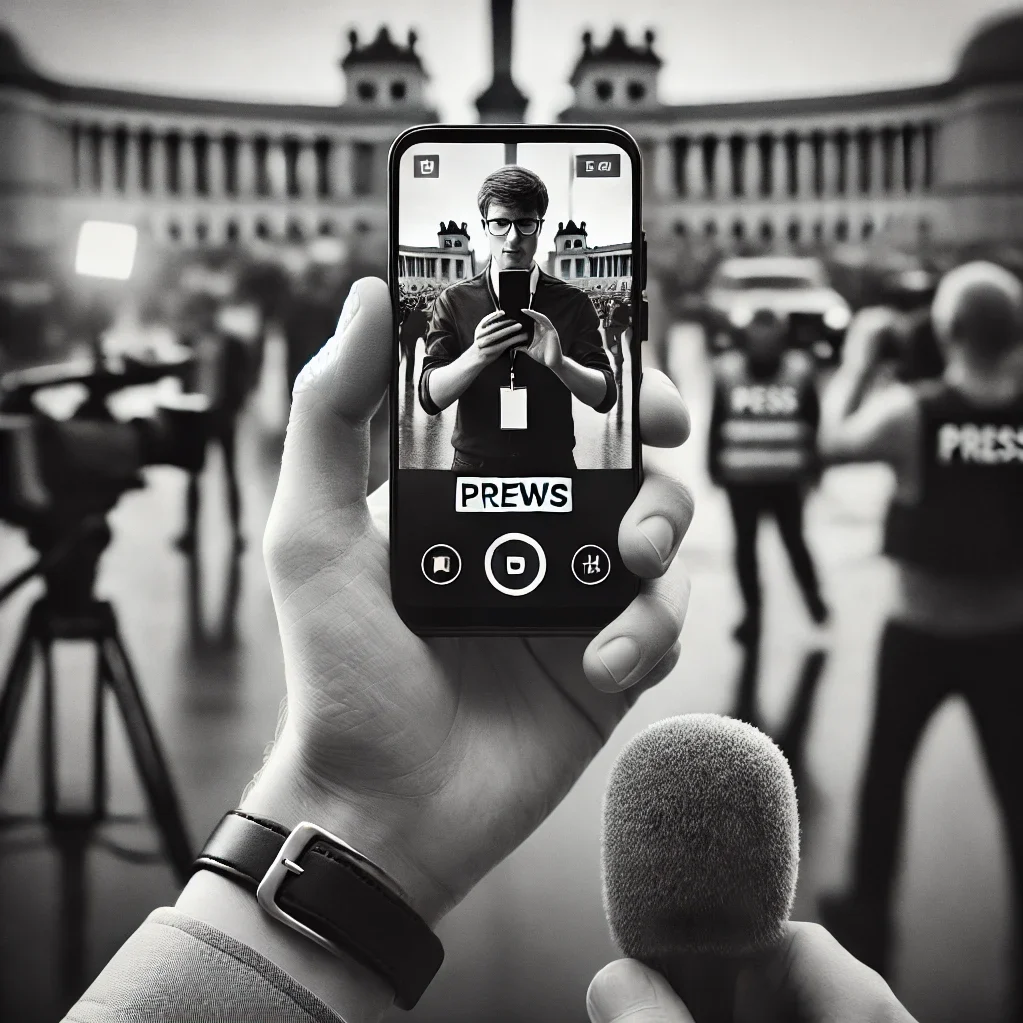
“Throughout the first stage, students worked closely with their mentors—including professional journalists, MoJo trainers, and academic experts—who guided them in crafting 5–7 minute video stories. Each piece was shot and edited entirely on smartphones, applying core mobile journalism techniques to deliver compelling, field-driven narratives,” said Gheorghe Anghel, co-organizer of the competition and Lecturer at the Faculty of Journalism and Communication Studies, University of Bucharest.
The student-produced video stories brought to light powerful narratives, spotlighting people, places, and social issues from their home countries. From underrepresented communities to untold local heroes, the entries tackled topics with contemporary relevance and journalistic depth. Prior to submission, participants took part in a hands-on mobile journalism and storytelling workshop led by Miodrag Soric, Chief Correspondent at Deutsche Welle (DW), designed to sharpen their editorial focus and enhance their visual storytelling skills.
The first stage of the competition, including the jury deliberation, was held online on October 31. Entries were reviewed by a distinguished panel of media professionals: Alice Iacobescu (Romania, former journalist at BBC World Service, Digi24, Europa FM), Marian Andrei (Romania, Senior Correspondent & Junior Producer at PRO TV), Dorina Iurcu (Republic of Moldova, former journalist at Publika TV and Moldova 1), Raivis Vilnus (Latvia, journalist and MoJo trainer), Jona Kaso (Albania, investigative journalist), and DW’s Miodrag Soric.
18 journalists took on mentoring roles, guiding student teams throughout the competition
MoJo Arena, launched in 2021 by the Faculty of Journalism and Communication Studies at the University of Bucharest, continues to grow as a regional hub for innovation in mobile storytelling. For the second consecutive year, the competition is held in partnership with Deutsche Welle (DW)—Germany’s international broadcaster and one of the most respected global media institutions.
“We’re proud to collaborate once again with DW and to have their journalists actively involved in this initiative,” said Anamaria Neagu, founder and co-organizer of MoJo Arena. “Our shared mission is to empower the next generation of journalists—agile, professional, and globally minded—ready to navigate a fast-paced and complex media landscape. I’m deeply grateful for the trust DW has placed in us, and for the dedication of the 18 mentors who supported our student teams this year.”
The mentors, listed in order of team entry, included: Mădălina Chițac (Antena 1), Aida Sofic Salihbegovic (Coordinating Editor Programs for Europe, DW), Ștefan Vasile (Executive Producer, Euronews Romania), Andrei Virlan (journalist and MoJo trainer), Azra Delmanović Avdić (journalist), Nensi Blazevic (journalist and MoJo trainer), Larisa Antal (ProTV), Vitalie Guțu (journalist and MoJo trainer), Elena Cosma (Euronews Romania), Tena Perisin (journalist, professor, and MoJo trainer), Cristian Petru (TVR), Roman Paziuk (Chernivtsi National University), Mihai Ghiță (Editor-in-Chief, Kanal D), Lamija Alečkovic (freelance journalist and MoJo trainer), Iryna Ravlyk (Chernivtsi National University), Ștefan Sfichi (“Ștefan cel Mare” University of Suceava and MoJo trainer), Cristina Radu (Snoop.ro), and Nataliia Nechaieva-Yuriichuk (Chernivtsi National University).
Six teams will compete in the in-person final in Bucharest.
The top three international teams advancing to the final are:
- Creative Angle (Croatia): Lucija Blagonić & Petra Kolovrat, mentored by Prof. Dr. Tena Perisin (University of Zagreb)
- Ela & Marko (Croatia): Ela Hamzić & Marko Kralj, mentored by journalist & Lect. Nensi Blazevic (University of Zagreb)
- Re:Start (Ukraine): Alina Mazhuha & Yelyzaveta Venhrynska, mentored by Assoc. Prof. Iryna Ravlyk (Chernivtsi National University)
Joining them are the top three Romanian teams:
- Cosmina & Daniel (University of Bucharest): Andreea Cosmina Măndică & Daniel Andrei Matei, mentored by Cristian Petru (TVR)
- The Green Chapter (UAIC Iași): Tudor Andrei Vieriu & Diana Emilia Țofei, mentored by Aida Sofic Salihbegovic (DW)
- Two Frames Ahead (University of Bucharest): Alexandra Stancu, mentored by Cristina Radu (Snoop)
Over the course of two days, finalists will take part in intensive workshops led by DW trainers, hosted in partnership with the Faculty of Journalism and Communication Studies. The final challenge? To produce a brand-new mobile journalism piece—conceived, filmed, and edited entirely on smartphones—demonstrating editorial agility, creativity, and field-readiness.
The third edition is organised within the CEEPUS Network „Media in Transition / Transition in Media (MTTM)”.
About the organizers:
Anamaria Neagu is a media trainer and lecturer at the University of Bucharest, with a background in print (Gazeta Sporturilor) and television (Realitatea TV, PrimaTV, TVR). She holds a PhD in Communication Sciences and previously served as Dean of the Faculty of Journalism and Communication Studies. Her research explores emotional framing in media, public discourse, and digital news consumption. She is the author of Live Broadcasting (2012, Polirom) and Emotions in the Media. The News of Terror (2018, University of Bucharest Press).
Gheorghe Anghel is a Lecturer at the Faculty of Journalism and Communication Studies, University of Bucharest. His expertise spans graphic design, digital journalism, social media, mobile journalism, and religious journalism. With over 12 years of experience in media, he has held diverse roles ranging from reporter to editor-in-chief. He pioneered one of Romania’s first university-level courses in mobile journalism, focused on smartphone-based reporting and social media storytelling.